Walkthroughtheworld,
evenwhenyoucannotseeorhearit.
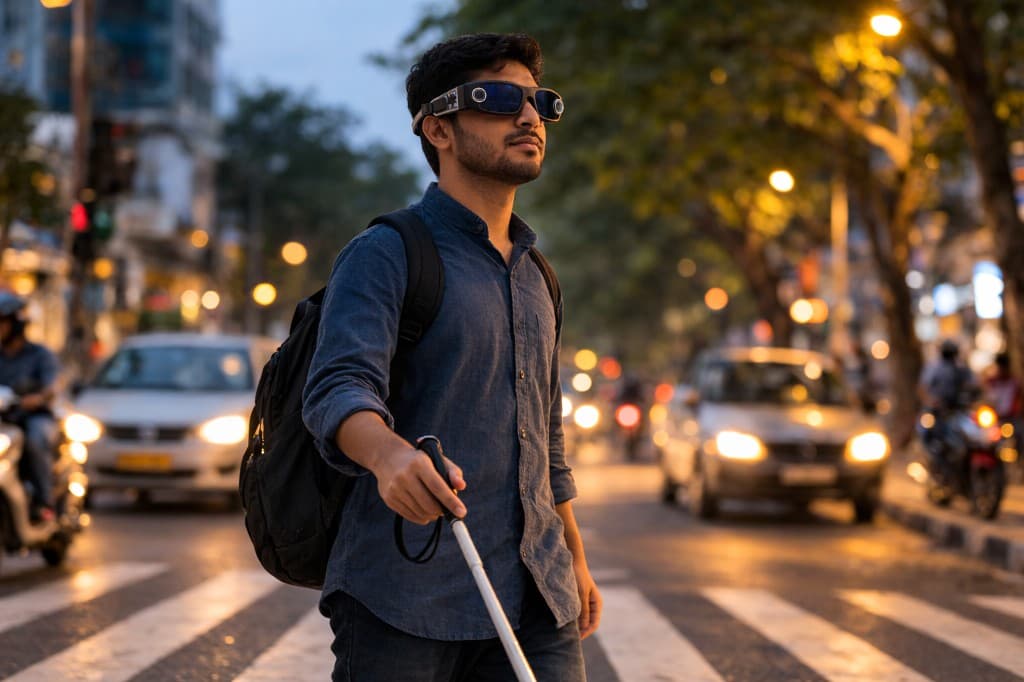
Close your eyes for ten seconds and try to cross a busy road. This is the starting point of LifeLens — a concept for AI-powered goggles that could quietly describe the world and caption voices in real time.
Chapter 1 — Why this matters
Every number here is a street, a family, a life interrupted.
Annual deaths
0+road deaths every year worldwide
Vision
0Bpeople living with vision impairment or blindness
Hearing
0Bpeople living with hearing loss
Chapter 2 — The street view
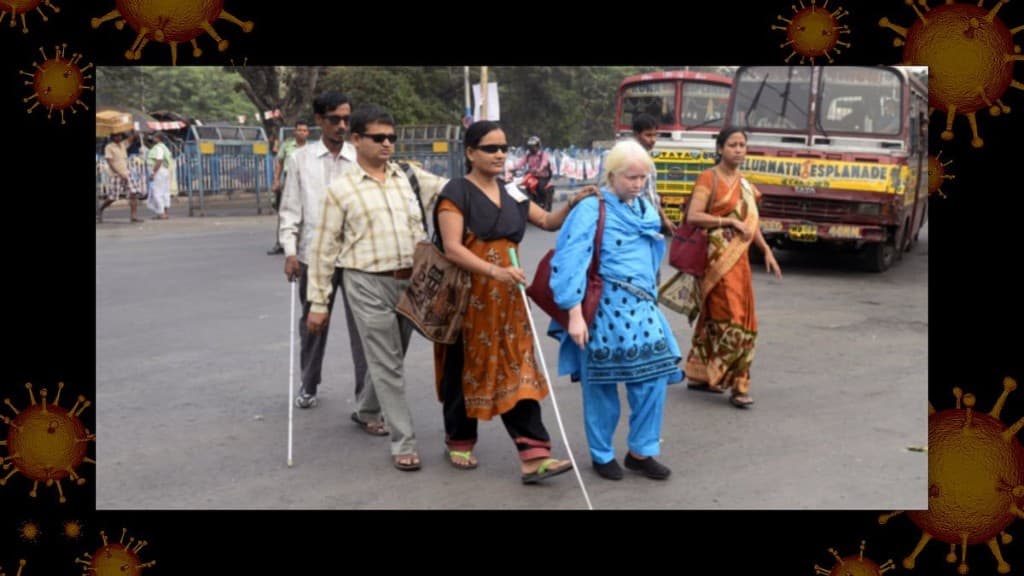
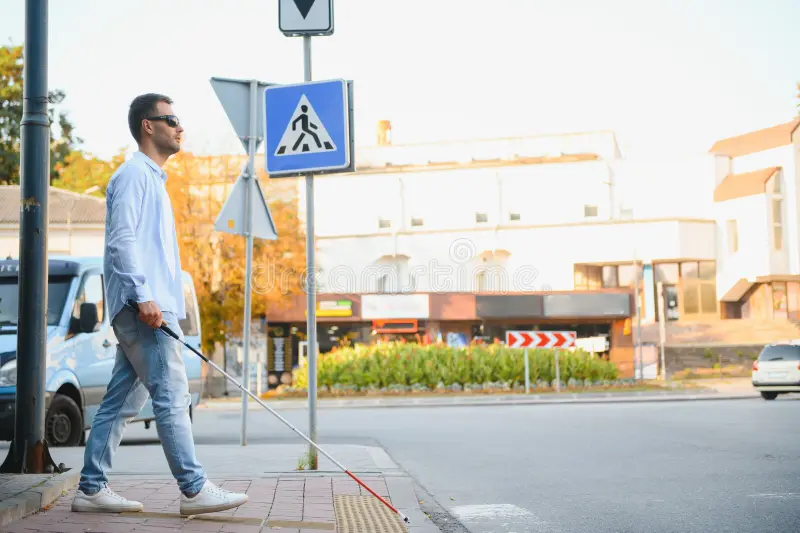
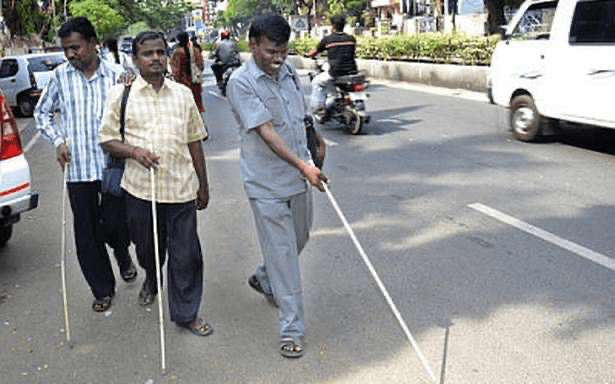
Instead of slides, here is the news feed of their day.



Chapter 3 — Two imagined days
Before and if LifeLens existed.
Counting steps, memorising cracks in the pavement, hoping no bike was parked in his path today.
One night, the sounds at a crossing blurred together — horns, music, shouting — and he froze on the edge.
In our concept, LifeLens whispers: “Zebra crossing in 3 metres, car from the left, your friend Rahul ahead.” The city becomes information, not fear.
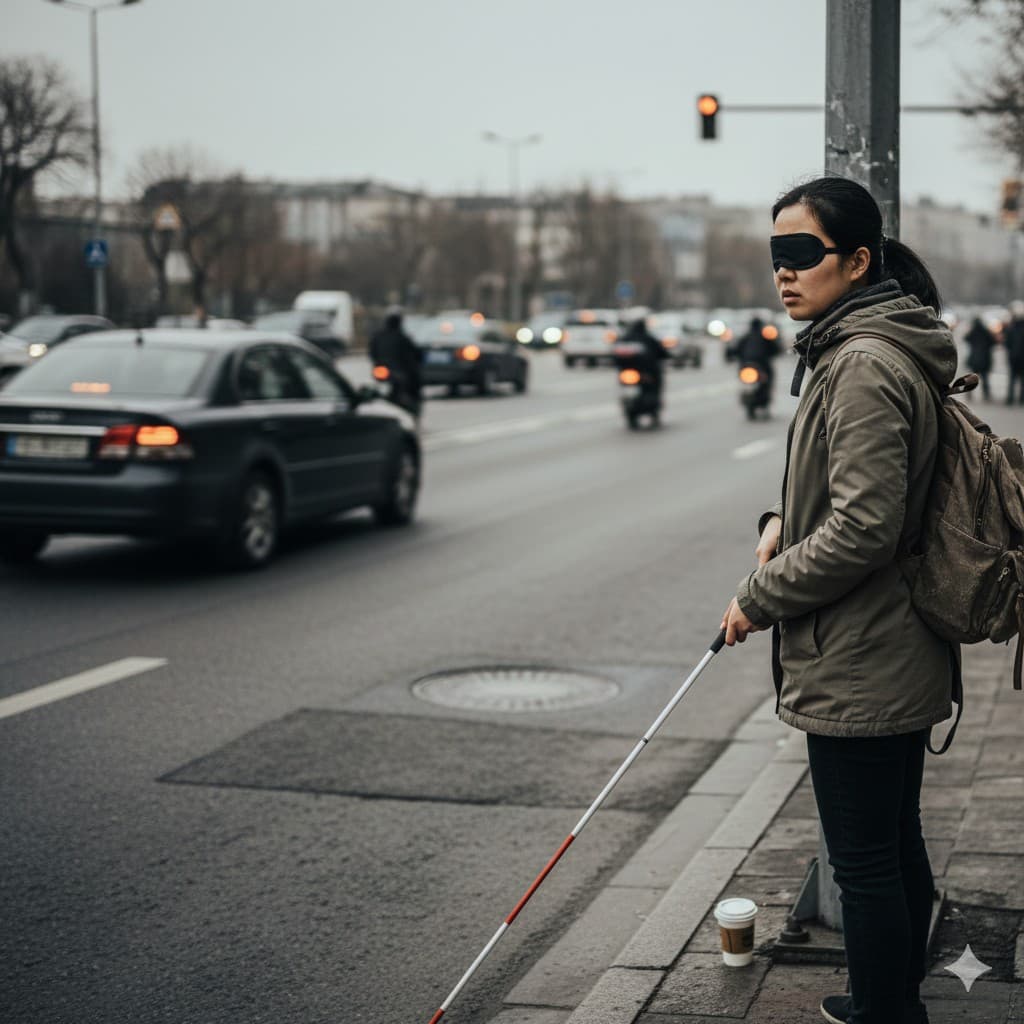
Before
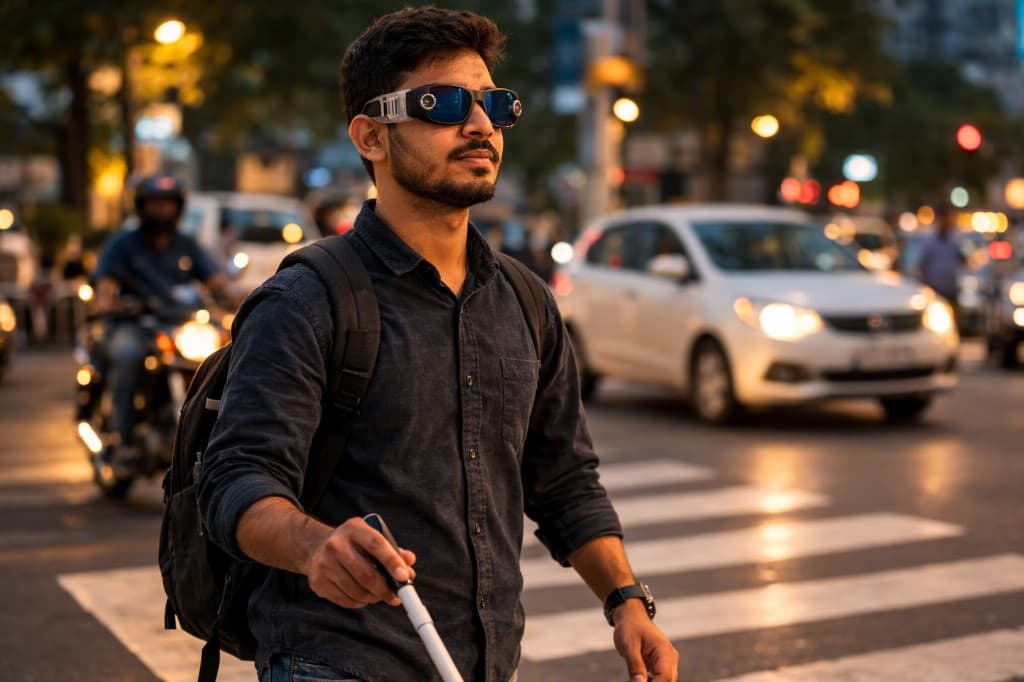
If LifeLens existed
In class, Arjun watched lips and guessed the missing words, laughing a beat late when everyone else did.
When an alarm rang behind him, he only understood when he saw people stand up and run.
In our concept, captions float on his lens: the teacher’s explanation, the joke, the words “I’m proud of you.” The alarm flashes as text before panic spreads.

Before
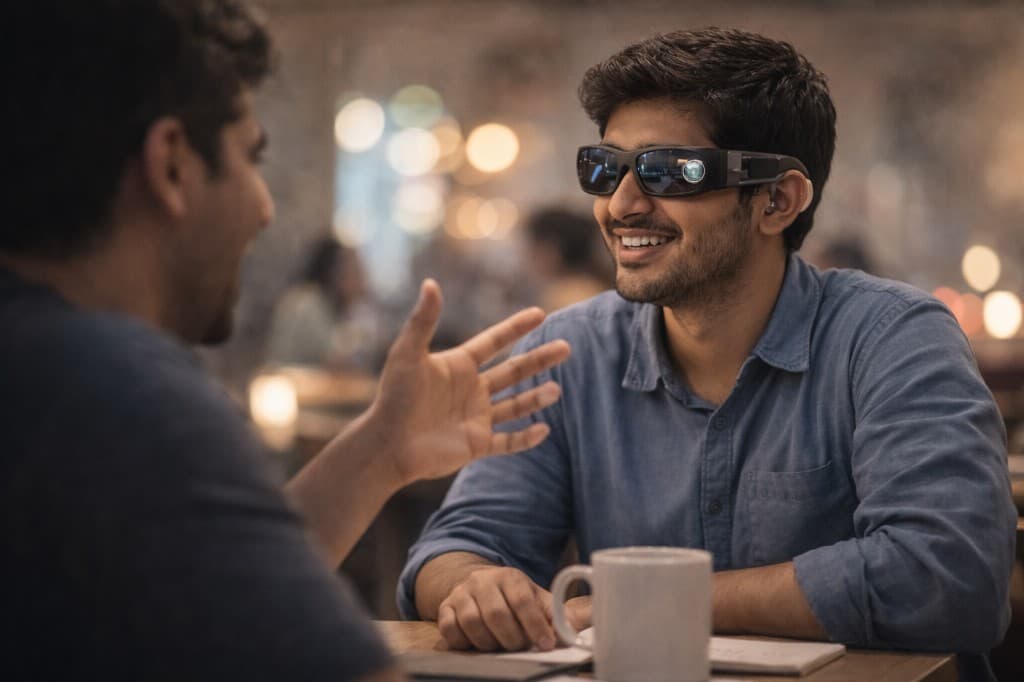
If LifeLens existed
Chapter 4 — The concept
A quiet companion that sees and listens for you.
LifeLens is currently a concept — a pair of AI-powered smart goggles that integrate computer vision, distance sensing (ultrasonic), motion detection (MPU6050), speech recognition and text display, with real-time processing on a Raspberry Pi. The device could detect obstacles, read text, caption speech, and keep loved ones informed when something goes wrong.
Eyes
Camera + AI that spots obstacles, cars, crossings, friends, doors, and text.
Ears
Speech-to-text engine that could place live captions on the lens for deaf users.
Safety net
If someone falls or stops responding, GPS and last image could notify family or helpers.
Chapter 5 — Our early sketches
Hardware concepts for blind and deaf users.
These are not finished products — they are prototype ideas we explored while thinking about how LifeLens could live on a real pair of goggles.
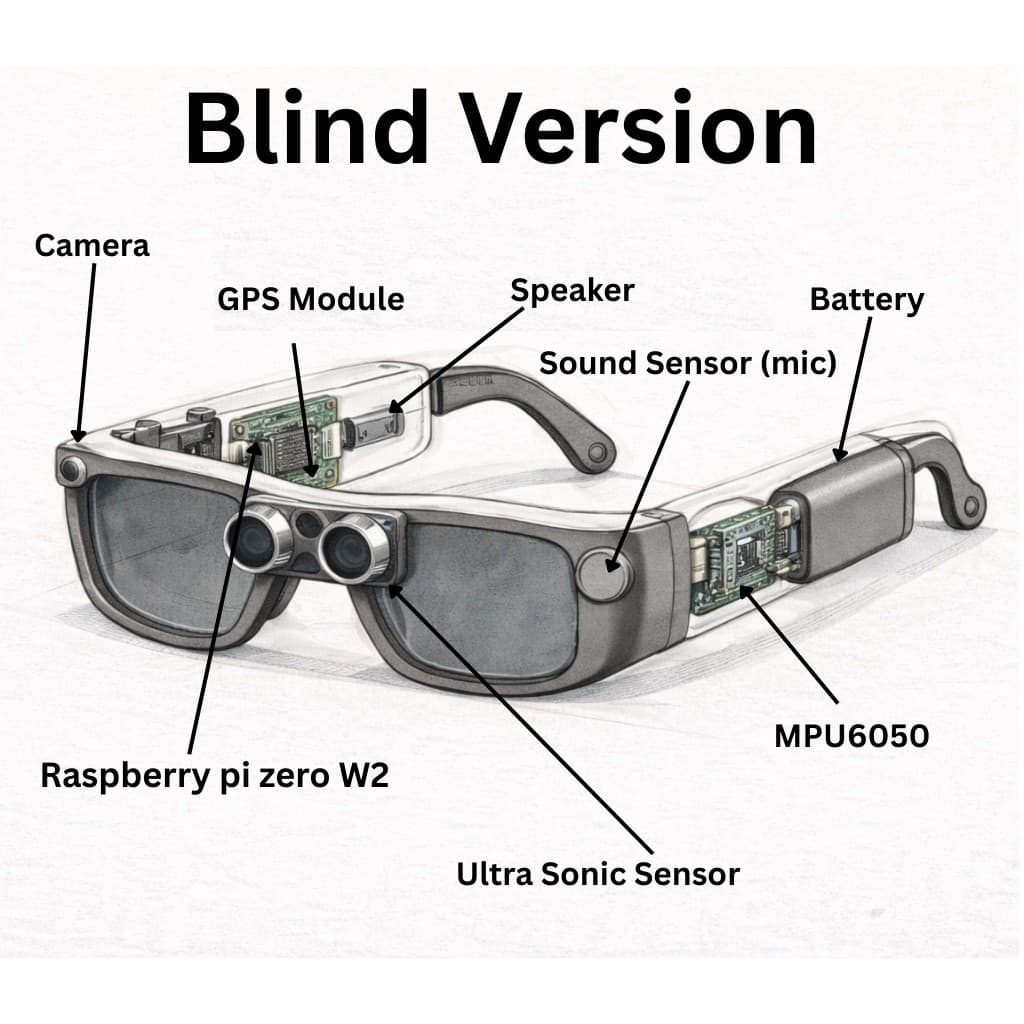
Blind version
Camera, Ultrasonic Sensor (HC-SR04), Raspberry Pi Zero W2, speaker, microphone, GPS module, MPU6050 motion sensor and battery for obstacle detection, navigation and fall-detection alerts.
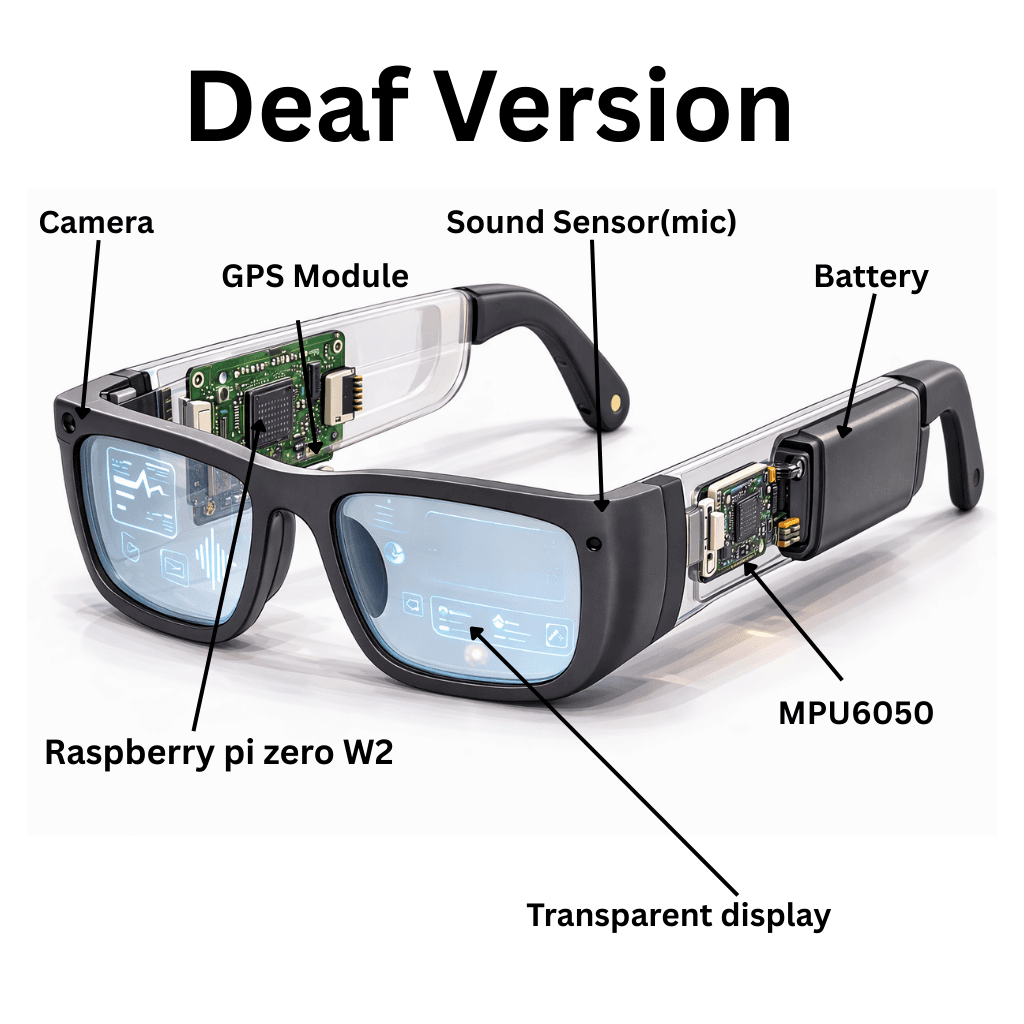
Deaf version
Camera, sound sensor (mic), Raspberry Pi Zero W2, transparent display, GPS module, MPU6050 and battery for live captions and safety alerts.
LifeLens is still an idea. But the lives it could touch are very real.
This site is our way of telling their story for the hackathon — connecting real struggles to a concept that could one day help blind and deaf people move through the world with more confidence.
Built by Code Paglu's
Our Team
Code Paglu's
Building accessible technology for blind and deaf communities.